5 Things to Consider When Choosing a Wedding Videographer
February 16, 2026
When I started this journal, one of the first things I said was that I wouldn’t be falling in to the trap of using ChatGPT to generate any “5 tips to…” entries. And while this entry might look exactly like that, it’s not. This is something that I often talk about when I meet with couples, be it at wedding fairs or during discovery calls. The list is largely subjective in the way that each point will be prioritised differently depending on what they value most. Regardless, these are some of the most important things to consider when you’re on the lookout for a videographer for your wedding;
1. Style & Approach
2. Who do you get on with?
3. The dreaded budget
4. Experience
5. Redundancy
6. Summary
1. Style & Approach
First and foremost you want to be looking at each videographer’s portfolio to see if their films resonate with you in terms of what is covered, how it’s colour graded and how it’s put together with audio. Is it set to music? Overlayed with snippets for vows/speeches? Ultimately you should be asking yourself if you would be happy to receive a wedding film similar to what is being shown on their site.
You might be able to get an insight in to their approach to filming from their website, but your best bet is likely to be social media. Many videographers have started giving insights in to how weddings are filmed and will often release short BTS clips filmed by an associate videographer (or on their Meta glasses) so couples can see things from a videographers perspective. Are they someone who is more introverted and lets the day unfold naturally? Or are they more energetic and extroverted, preferring to be more involved and directive? Both are equally acceptable, it’s just up to you to decide the approach you prefer.
Of course, it comes with the caveat that you never truly know what a person is like and how they behave/interact with you and your guests unless you speak to them in person. Which leans in nicely to my next point…

2. Who do you get on with?
Typically, your photographer and videographer will spend a large chunk of the day with you, so you’ll want to make sure that you actually like the person. I can safely say from experience at my own wedding that choosing someone without getting to know them properly can have serious concequencies.
Now, without wanting to make this about me (because this is about you), I will share a little bit about my day as a cautionary tale. My videographer all the way back in 2017 ended up not being exactly who they said they were. I shan’t mention names, because that’s not fair. But ultimately the company doesn’t exist anymore. Now whenever my wedding comes up in conversation with family and friends, it’s usually prefaced with “do you remember your videographer?” – and not in a good way.
So, make sure you speak to any potential videographers either over the phone, on a video call, or even in person if you can (wedding fairs are a great opportunity to do this). The standard of wedding videography is very high across the board and you’ll be hard pressed to find someone who isn’t particularly good, so choosing who you get on best with is key when it comes to how you feel about being filmed on the day. When you speak to them, do you immediately feel at ease? Like you have common ground, or that you can relate to each other? Without these foundations it can often feel awkward, which risks coming across on camera.
3. The dreaded budget
We all know money doesn’t grow on trees, so this one goes without saying. But while it’s important to ensure you stick to your budget, it’s also vital that you don’t regret going for the cheap option years down the line (or regretting deciding against a videographer full stop).
It’s true that the vast majority of the things you pay a lot of money for when it comes to your wedding will only be used once. The dress will be put away, the cake will be eaten and the flowers will fade. It’s important that your memories don’t suffer the same fate and is why I would always recommend hiring a videographer and a photographer. Memories tend to fade over time, but having something to look back on to remember how your day unfolded, the voices of those who gave speeches, and the mannerisms of those no longer with us, is absolutely priceless. I would urge anybody to be mindful of this when deciding if the budget can stretch, and would argue that these are two of the main things you should spend your money on. I’m obviously biased, given what I do for a living, but from experience I’ve never heard of anybody that’s regretted having a videographer (even me after my own wedding). But I have heard far too many tales of couples who have regretted not having one.
4. Experience
Every videographer has to start somewhere. My very first wedding was free of charge, with subsequent bookings charged at a significant discount while I built up my portfolio. If you are looking for something at the lower end of the price-scale and are happy giving an opportunity to an upcoming videographer, there are always people looking to establish themselves in the industry by offering services for a very competitive price.
That said, it’s worth knowing the potential risks involved with hiring someone who has little to no experience in filming weddings. Will they have the right equipment to ensure the audio from vows and speeches is captured clearly? Do they know the best place to position their cameras at the crucial moments? Are they able to engage with you and your guests professionally, no matter the conditions on the day? Hiring someone who has experience with weddings (rather than being a family friend who “does video”) can go a long way to preventing mishaps on the day. Not to mention potential issues with insurance and how they keep your footage safe. Speaking of which…
5. Redundancy
Hold on to your hats. This one gets quite technical but it’s arguably one of the most important things to consider (and is also the most overlooked) when choosing a wedding videographer. Redundancy refers to the backup systems that are put in place to ensure your footage is kept safe, and applies on the day itself while the cameras are rolling, the immediate aftermath, and to longer term storage. The last thing you want to be facing is the prospect of lost or corrupt video files from one of the biggest days of your life, simply through lack of appropriate redundancy. Here at Red Letter Films, footage is kept safe by using the following redundancy methods (like I said, it gets a bit technical, but it’s important);
On the Day
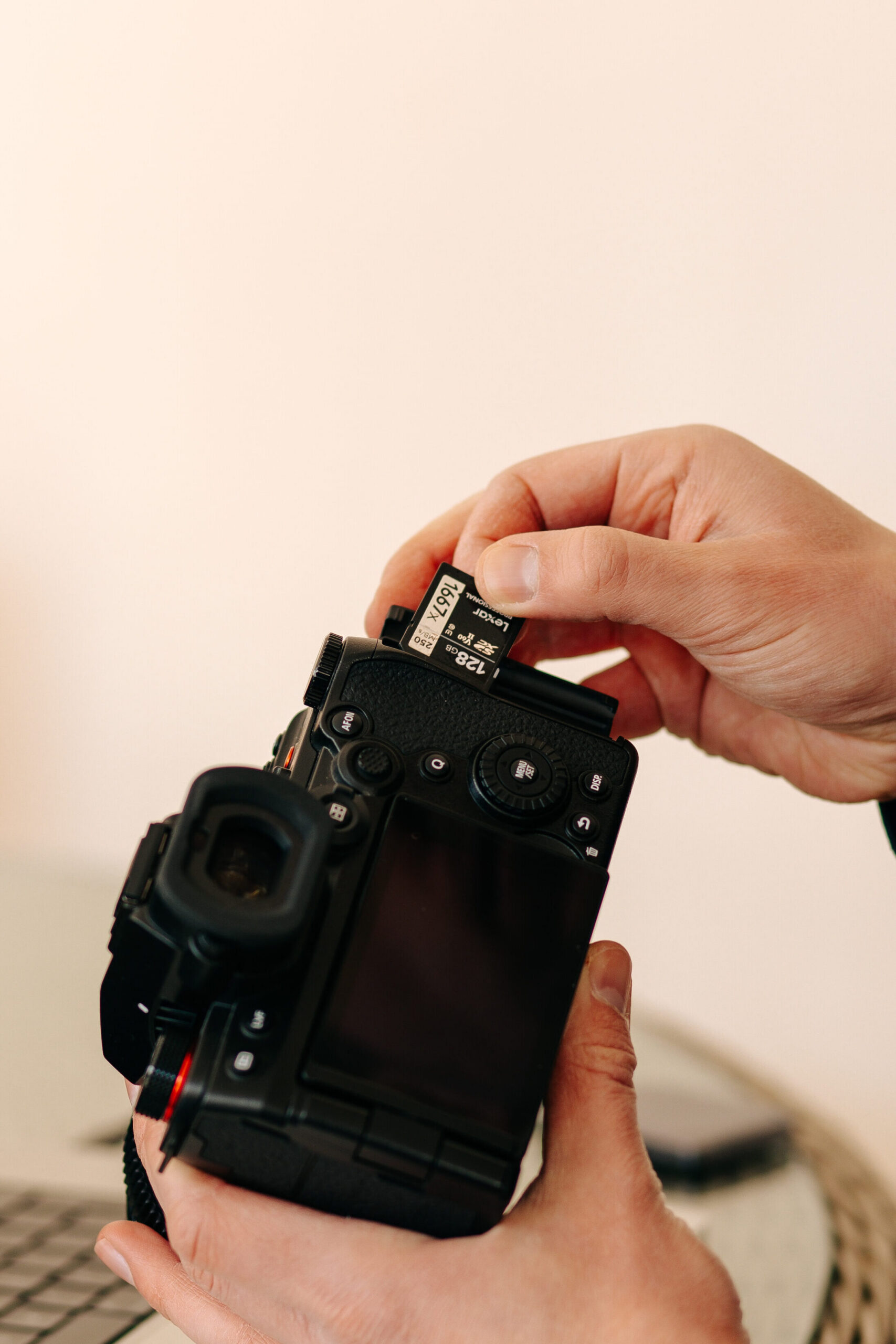
All of my cameras record to two cards simultaneously to significantly reduce the risk of lost footage. While the risk of two cards becoming corrupt at the same time in the same camera can never be impossible, it is extremely remote. This is part of the reason why I film the key moments of the day (ceremony and speeches) with multiple cameras, as there will always be backup angles in case the worst was to happen.
Immediate Aftermath
As soon as I return home I initiate a three-step backup process.
- Footage from the cards is backup up to a NAS (Network Attached Storage) made up of 4 x 8TB hard drives, 24TB of which is for storage, the other 8TB is for striping the data so that if one of the drives fails, the footage remains safe. The NAS system is also connected to an independent backup power supply to ensure no data is lost during power outtages.
- An additional external hard drive is connected to the NAS, which immediately creates a separate backup of the footage if, for whatever reason, the NAS system was to fail.
- A separate external hard drive also receives a copy of the footage and is kept off site for the absolute worst case scenario.
While the above backup process is robust, it is impossible to remove the risk completely.
Longer Term Storage
By signing a contract with Red Letter Films, you give consent for your footage to be stored securely for a minimum of 12 months. The reason for this is that on occasion, couples have decided to add an extended highlight film to their booking, sometimes months later after everything has been delivered. Without the safe storage of this footage, the additional film wouldn’t be possible.
Summary
As you can see, there is so much to consider when you’re searching for a wedding videographer to capture your big day, and this list isn’t exhaustive. Other factors might include the deliverables (what you actually receive from the videographer), the equipment they use or how familiar they are with your chosen venue. It’s massively subjective but hopefully this gives you an insight in to some of the key factors and why they are so important.

© Red Letter Films 2026
